Sick and Tired of Working Your A*s Off For Someone Else?
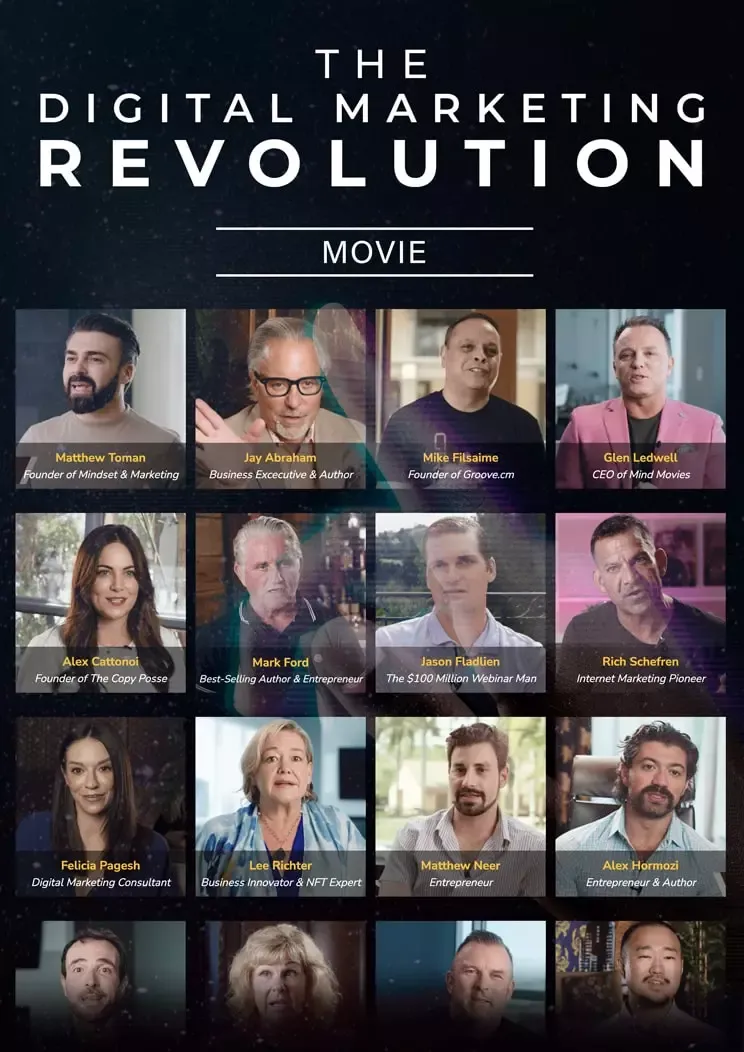
JOIN 45 OF THE WORLD’S TOP
What you’ll learn from this life-changing movie:
How to use the Digital Marketing world to live in total freedom… traveling the globe, hanging out with great friends, and working from your laptop anytime, anywhere!
The proven formula for making a huge online income - learning it directly from the masters who have done it all! They show you the way. It’s now time for you to get paid what you’re really worth.
Why now, more than ever, it is not only possible, but the perfect time to turn what you love into a highly paid business of your own, while making an impact on those and the world around you.
How to get up and running for free while getting access to the apps and tools needed to turn your ideas into a successful business.
"This is such an inspiring movie. My biggest takeaway: the power of the Internet has helped me reimagine what is possible and that the only obstacle to success is my fear. Take a risk, lean into that fear, and remember that there is a risk in doing absolutely nothing. There are no mistakes, just different lessons."
- Ash Coxon
"I know this movie will be the catalyst for massive success of many viewers. They may not even know it prior to watching it, but they’ll have that feeling in their heart and soul as they watch it, “I can do this!” And they’ll then take the actions to transform their futures. Very inspiring!"
- Tom Beal
"Wow! Between the 5 Laws to run a successful business and the great business ideas that inspired and motivated me, I feel exhilarated! One quote that stuck with me is: "You only need 1000 people to pay you $1,000 ..." and suddenly making my first $Million seems not only achievable, but exceedable."
- Simone Blum
Founder of Groove.cm
Business Leader & Author
Author & Entrepreneur
Nutrition & Fitness Expert
Founder of Acquisition.com
Founder of the Copy Posse
CEO of MindMovies & JV Hacking
Co-Founder of DigitalMarketer.com
Founder of Upgrade Labs & Author
Transformational Therapy Trainer
Transformational Leader
Internet Marketing Pioneer
Copywriting Expert
Speaker, Author & Webinar Expert
Founder of Mindset & Marketing
Author & Entrepreneur
Digital Real Estate Investor
Marketing Coach & Strategist
Author & Copywriting Expert
Copywriter & Founder of Eden Beauty